Who Were the Real “Rebels”?
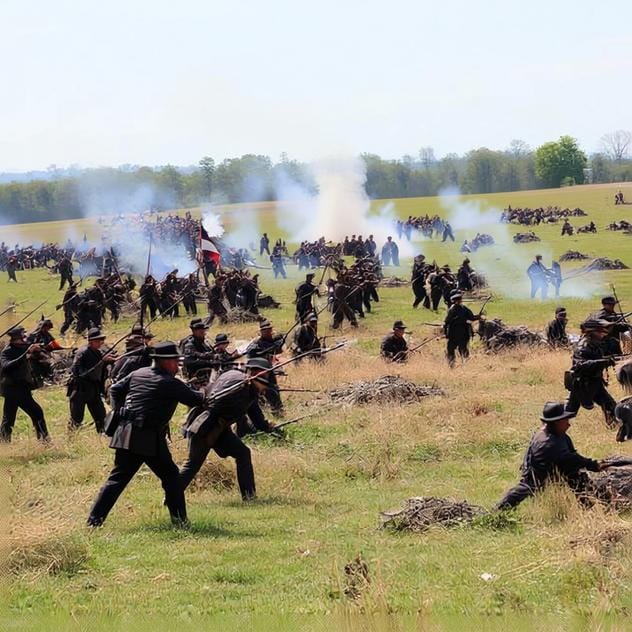
Words are never neutral. They come with freight, with moral coloring, with the weight of whoever controls the narrative. Nowhere is this clearer than in the language America uses to describe the War Between the States. We have inherited terms without examining the frame they carry, and few words have done more historical damage than the label “rebel.”
The soldiers who wore gray or butternut in the 1860s did not recoil from the nickname. Most had thicker hides than we do today, and many embraced irony as a virtue. Yet the modern connotation of rebel misleads: it implies defiance against lawful authority, the overthrow of proper order, and opposition to an established sovereignty. It smuggles in a moral judgment before the historical question is even asked.
And therein lies the problem.
Because by the legal and constitutional theory the South actually held, there was no rebellion at all.
1. The Historical Term Was “Secessionist” — And Everyone Used It
The people of the time knew what they were witnessing.
In diaries and letters—Northern and Southern alike—we see:
- “secessionist,”
- “secesh,”
- “sesesh,”
- “those secesh pickets,”
- “a secessionist cavalry patrol,”
- “a sesesh sympathizer in Baltimore.”
These were the everyday descriptors of the men on the ground. They are neutral, descriptive, and accurate. They explain what happened, not what someone later wished to imply.
A State seceded.
Its citizens defended it.
The term “secessionist” simply matches the fact.
2. Rebellion Requires a Proper Sovereign — And the South Denied Washington Was One
To be a rebel, one must rise against a rightful, centralized authority.
But the entire Southern constitutional argument—from Jefferson, to Tucker, to Calhoun, to Stephens—was that:
- The Union was a compact,
- The States were sovereign,
- The Federal Government was an agent created by the States,
- And sovereign States retained the right to withdraw from that compact.
Whether one agrees with the argument is irrelevant here; what matters is that it was a legitimate constitutional interpretation widely held for decades—even in the North.
If a State is sovereign, it cannot “rebel” against an agent it created.
It can, however, secede.
Thus “rebel” assumes the very point under dispute.
3. Federal Actions in the Early War Fit the Classical Definition of Rebellion More Closely
If “rebellion” means altering constitutional order without lawful authority, then the North’s wartime measures bear examination:
- Suspension of habeas corpus outside congressional permission
- Arrests of newspaper editors
- Imprisonment of legislators
- Military occupation of State capitals
- Naval blockade without a formal declaration of war
- Conscription without constitutional basis
- Dramatic expansion of federal power
These were revolutionary changes to the federal structure.
One could argue—purely in the classical republican sense—that the side which overrides its own constitutional limits is closer to rebellion than the side which declares withdrawal according to its inherited understanding of sovereignty.
The irony should not be lost.
4. The Confederacy Chose the Language of Legitimacy, Not Rebellion
The Southern states formed a government with:
- a President,
- a Congress,
- a Cabinet,
- a Constitution,
- national courts,
- embassies and diplomats.
They sought recognition, not insurrection.
Their soldiers saw themselves as:
- defenders of home,
- guardians of family and soil,
- protectors of State sovereignty,
- heirs to the American Revolution’s principles.
Whether history agrees with all of that is beside the point; the men themselves believed they were acting lawfully, not rebelliously.
Thus “secessionist” reflects their self-understanding.
“Rebel” does not.
5. “Rebel” Became Dominant Only After the War — When the Narrative Hardened
During the war, Lincoln’s Cabinet used the word cautiously. They avoided declaring the conflict a “rebellion” too explicitly because doing so complicated blockade legitimacy under international law.
Only after victory, during Reconstruction and its aftermath, did the term “rebel” become the standard label—because the federal government then controlled:
- education,
- textbooks,
- public memory,
- popular literature,
- and eventually the motion picture industry.
Victory writes vocabulary as surely as it writes history.
And once the North defined the terms, the label stuck.
6. Precision Matters: “Secessionist” Is the Historically Honest Name
Using the accurate word is not an endorsement of any political project, past or present. It is simply the recognition that truth begins with proper naming.
Secessionist is:
- factually correct,
- historically authentic,
- linguistically neutral,
- and morally unloaded.
Rebel is:
- politically charged,
- postwar-imposed,
- and legally misleading.
To speak with integrity about the past, especially about a conflict whose meanings still echo into the present, we must use the terms people used at the time—and understand the worldview behind them.
Language Is the First Battlefield
Every culture war begins with the vocabulary—what things are called, and who gets to do the calling.
To use “secessionist” is not to pick a side in a centuries-old argument. It is simply to tell the truth as those who lived it understood it.
But it also raises a larger point, one central to the work of the Hatchie River Institute:
If we surrender the language,
we surrender the meaning.
And if we surrender the meaning,
we surrender the memory.
In restoring precision, we restore honesty.
In restoring honesty, we restore clarity.
And in restoring clarity, we take the first step toward understanding—not mythology, not propaganda, but reality.