The Next Christian Revival Won’t Look Like the Last One
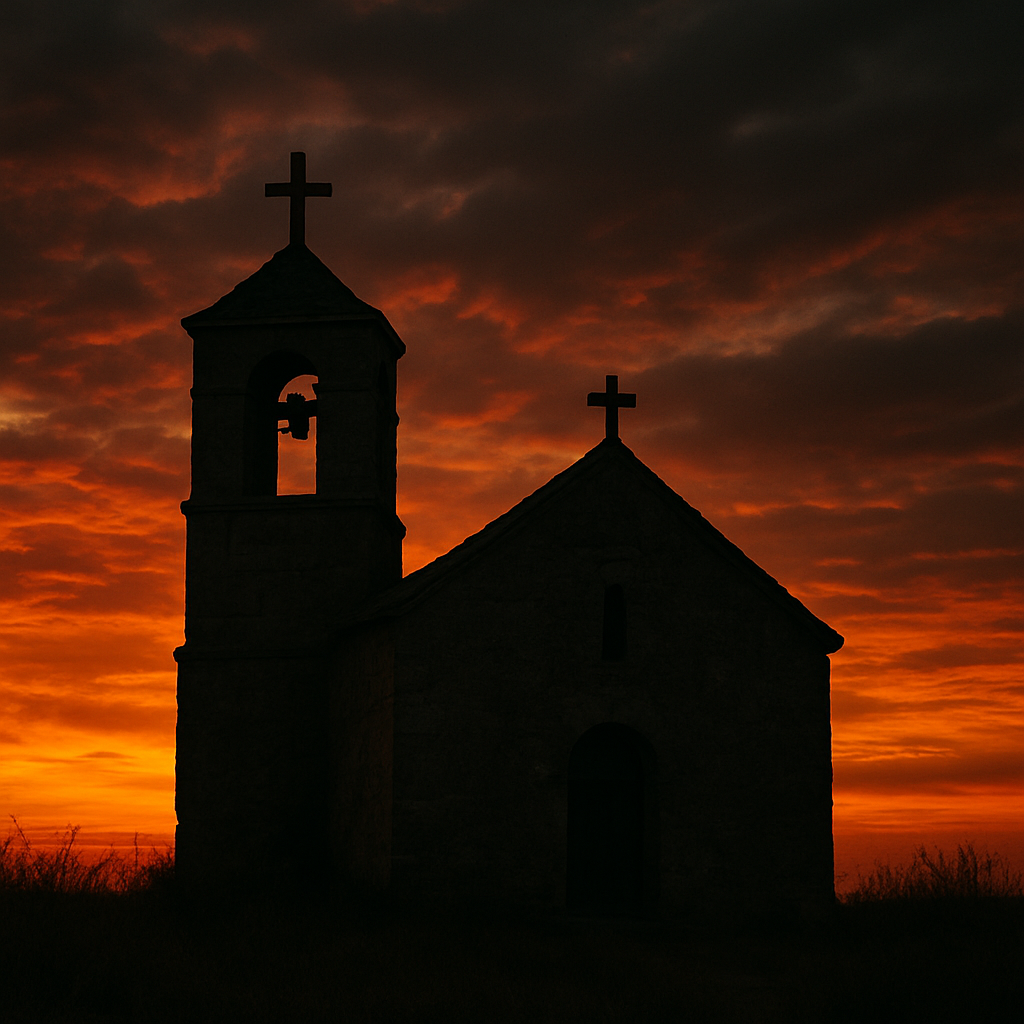
The West keeps waiting for a revival that looks like the last one.
It isn’t coming.
Every few years someone stands up and prophesies another Great Awakening, as if the Spirit were merely running behind schedule. But the landscape has changed, and the conditions that produced those awakenings are gone. The soil is different. The people are different. The pressures are different. And the Church — especially in the West — has yet to admit that to itself.
If revival is coming, it will not arrive dressed in the familiar garments of mass rallies, celebrity evangelists, or roaring stadiums. It will bear the marks of something older, harder, and truer — the marks of a remnant, not an empire.
And that, if we are honest, is exactly what God tends to work with.
The Collapse of Cultural Christianity
For two centuries, Christians enjoyed a kind of gravitational advantage. The culture leaned our direction. Respectability, tradition, and social norms all worked quietly in our favor. Churchgoing was expected. Religion was a civic good. The moral architecture of the West was built with Christian stone.
That era has collapsed.
We now live in a time when Christian conviction costs something again — reputation, opportunity, position. The political class has learned how to weaponize procedure to punish dissent. The professional class has decided the name of Jesus is an embarrassment. And large portions of the population no longer know the gospel well enough to reject it; they simply treat it as irrelevant.
In other words, we’re back where we started: a minority faith operating in a hostile, pagan world.
And that’s not bad news. It’s clarifying.
Institutional Evangelicalism Is Dying
This is the uncomfortable part — but it has to be said.
The churches that built their identity on relevance, market strategy, and consumer-friendly Christianity are shrinking at a pace even their own leaders can no longer hide. Their model worked as long as society kept giving Christianity the benefit of the doubt. Once the cultural current shifted, their foundations washed away in a single generation.
Their decline is not a mystery. They built churches the way corporations build brands: on marketing, comfort, and self-expression. But Christ told Peter to build on rock, not market share.
Meanwhile, the churches that still preach the gospel without apology — the ones who hold the line on doctrine, sacrament, and truth — are the ones quietly growing.
Not exploding. Not trending. Growing: steady, slow, gritty, stubborn.
Like roots breaking through concrete.
The Future Belongs to the Persecuted Church
One of the most striking details of the modern world is this: Christianity is growing fastest in the places where it costs the most.
Iran. China. Nigeria. Underground across the Middle East.
The persecuted Church is not dying — it is multiplying.
Why?
Because persecution purifies. Because discipleship means something. Because the gospel preached by a bruised believer carries more weight than the gospel sold by a comfortable one.
And the West is beginning to taste the same pressure. Not in the same degree, not yet with the same consequences — but the spirit is identical: hostility toward truth, contempt for Christian ethics, suspicion of biblical authority, and an increasingly punitive legal framework for dissent.
The revival that comes to the West will not be born in conferences but in living rooms. Not in denominational headquarters but in families. Not in cultural power but in cultural exile.
The next pastors of the West will be forged under pressure, not spotlight.
The next saints will be warriors, not influencers.
A Remnant Faith for a Remnant Age
The language of “remnant” sounds small and defensive to modern ears, but biblically it is the exact opposite. The remnant is the seed of the future — the people through whom God rebuilds what a fallen civilization has destroyed.
Throughout Scripture the pattern is consistent:
- Israel collapses
- The majority fall away
- A remnant remains faithful
- God rebuilds through them
It is not the crowd that restores a nation.
It is the remnant who tremble before God.
In the modern West, we are entering that same pattern. The Christian majority is gone. The civic alliances have fractured. The culture has declared independence from reality itself. Yet the faithful remain — small, scattered, but hungry for truth, clarity, and holiness.
That is the soil revival grows in.
That is the Church Christ always uses.
The Revival Will Be Costly — and That’s Why It Will Be Real
The last major awakenings required a change in the heart. The next one will require a change in the spine.
God is raising up Christians who no longer look for the approval of the age. Men and women who do not care if they are misunderstood by the experts or despised by the elites. Believers who are willing to be marked as “intolerant,” “backward,” “dangerous,” or “unwelcome” — because the Name of Jesus means more than the applause of the world.
The West once assumed that revival came with cultural respectability. But the coming revival will be made of men and women who rejoice to bear the reproach of Christ — because they know that to fear God is to fear nothing else.
The old revival was about returning to church.
The next revival will be about returning to Christ.
A Call to the Front Lines
If you want to understand how God moves in a collapsing world, look not at the powerful but at the faithful. Look at the men and women who refuse to bend the knee. Look at the fathers teaching their children the faith after the schools abandon it. Look at the mothers whose prayers shake the walls of heaven. Look at the small congregations who still preach the Word and break the Bread.
Revival will not come from the centers of cultural influence.
It will come from the edges — and then move inward.
The West doesn’t need another spectacle.
It needs saints.
It needs courage.
It needs truth.
The next great revival will not look like the last, but if our eyes are open, we may find that it has already begun — small as mustard seed, quiet as dawn, fierce as fire.
The world is not waiting on us to get louder.
It is waiting on us to get faithful.
The Hatchie River Institute is dedicated to serious Christian scholarship, cultural analysis, and the recovery of truth in an age that has forgotten it. Our work is supported by readers who believe in restoring depth, integrity, and courage to the public square.
If you would like to support the mission of the Institute, you can do so here:
https://buymeacoffee.com/southernanglican